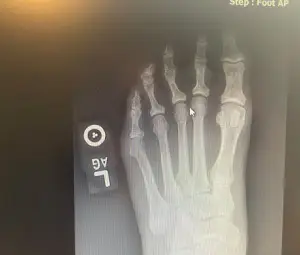
 Hallux limitus is a condition where one experiences limited movement in the big toe due to stiffness in its joint. It is usually caused by structural or biomechanical problems in the bone and presents as pain or discomfort when walking.
Different treatments exist for the hallux limitus, ranging from simple home solutions to surgical intervention. If you’re looking for help with a stiff big toe and need relief, Dr. Elizabeth Auger, DPM, is here to help.
What Is Hallux Limitus
Hallux limitus refers to restricted motion in the first metatarsophalangeal (MTP) joint, the main joint connecting your big toe, the hallux, to your foot. It is similar to hallux rigidus, where the joint becomes completely stiff, but unlike rigidus, allows for some movement, albeit often uncomfortable.
Hallux limitus may progress into hallux rigidus if left untreated.
Doctors diagnose hallux limitus primarily through a non-invasive physical examination. They check for the range of motion in your big toe, as well as observe for any swelling or pain.
Doctors may also use X-rays to evaluate joint space narrowing, bone spurs, or other structural changes that may be the cause of the condition. Catching it early helps them prevent worsening into more severe forms of joint damage.
Causes of Hallux Limitus
Hallux limitus is often caused by factors related to the physical condition of the foot and its bones. The most common are as follows:
- Structural or Anatomical Issues: A naturally long first metatarsal bone or having high arches or flat feet can put extra stress on the big toe joint.
- Biomechanical Problems: An abnormal gait, such as overpronation, can strain the joint over time.
- Arthritis and Joint Degeneration: Osteoarthritis is a common culprit, as it breaks down cartilage and reduces joint flexibility.
- Injury or Trauma: Past injuries like fractures, sprains, or turf toe (a sprain of the big toe) can damage the joint and lead to stiffness.
Factors outside the physical state of the foot can also contribute, but are less common. It is, for instance, possible for hallux limitus to be related to a genetic predisposition or an infection, though these can be exceedingly rare.
Common Symptoms of Hallux Limitus
The most common symptom of hallux limitus is a reduced range of motion in the big toe. This loss of range of motion can be subtle and require a close look to even notice, or it may be significant enough to be noticeable when walking.
The stiffness is usually observed when bending the toe upward. It may also be accompanied by other symptoms including:
- Pain during walking, running, or wearing tight shoes.
- Swelling or inflammation around the joint.
- Difficulty pushing off the ground, which may alter how you walk.
- Calluses or changes in gait as your body compensates for the discomfort.
Treatment Options for Hallux Limitus
Because most of the struggle associated with hallux limitus is biomechanical in nature, treatment plans often focus on relieving pressure and strain in the area to slow or prevent further progression. Most treatments are non-invasive, though surgery is an option for serious cases.
Conservative Treatments
- Footwear Modifications: Shoes with stiff soles or a rocker-bottom design reduce pressure on the big toe joint.
- Orthotics: Custom insoles can redistribute weight and correct biomechanical issues.
- Physical Therapy: Stretching and strengthening exercises help maintain joint mobility and reduce stiffness.
- Medications: Over-the-counter anti-inflammatories like ibuprofen can ease pain and swelling.
- Activity and Lifestyle Modifications: Avoiding high-impact activities like running or jumping can prevent further joint stress.
Interventional and Surgical Treatments
- Steroid Injections: These provide temporary relief from inflammation and pain.
- Cheilectomy: A surgical procedure to remove bone spurs and improve joint movement.
- Joint Fusion or Replacement: In severe cases or when hallux limitus progresses to hallux rigidus, fusing the joint or replacing it with an artificial one may be necessary.
How to Prevent Hallux Limitus
While some risk factors like genetics and foot structure cannot be changed, there are several steps you can take to reduce your risk of developing hallux limitus:
- Choose Proper Footwear: Wear shoes with adequate toe room, low heels, and good arch support. Avoid tight, narrow shoes that squeeze the toes or high heels that put excessive pressure on the forefoot.
- Maintain a Healthy Weight: Extra body weight increases stress on all foot joints, including the big toe. Maintaining a healthy weight reduces this mechanical stress.
- Address Biomechanical Issues Early: If you have flat feet, high arches, or an abnormal gait pattern, consider seeing a podiatrist for custom orthotics or other corrective measures before problems develop.
- Stay Active with Low-Impact Exercise: Regular, gentle movement helps maintain joint flexibility. Swimming, cycling, and walking are excellent options that don’t put excessive stress on toe joints.
- Practice Foot Exercises: Simple toe stretches and range-of-motion exercises can help maintain joint flexibility. Try gently pulling your big toe upward and holding for 15-30 seconds several times daily.
- Protect Your Feet from Injury: Wear appropriate footwear during sports and activities. Be cautious to avoid trauma like stubbing or jamming your big toe, which can lead to joint damage over time.
- Address Foot Problems Promptly: Don’t ignore persistent foot pain or changes in your gait. Early intervention can prevent minor issues from progressing to more serious conditions like hallux limitus.
Exercises for Hallux Limitus
Regular exercise can help maintain joint mobility, reduce stiffness, and prevent further progression of hallux limitus. These exercises should be performed gently and stopped if they cause significant pain.
Always consult with your podiatrist before beginning any exercise program.
Range of Motion Exercises
- Big Toe Flexion and Extension
- Sit in a chair with your foot flat on the floor
- Slowly lift your big toe upward as far as comfortable, hold for 5 seconds
- Lower your toe and then press it downward toward the floor, hold for 5 seconds
- Repeat 10-15 times, 2-3 times daily
- Toe Circles
- Sit comfortably with your leg extended
- Use your hand to gently guide your big toe in small circular motions
- Complete 10 circles in each direction
- This helps maintain joint mobility in all planes of movement
Stretching Exercises
- Manual Big Toe Stretch
- Sit and place your affected foot on your opposite knee
- Grasp your big toe with your hand and gently pull it upward and back
- Hold the stretch for 15-30 seconds
- Repeat 3-5 times, several times throughout the day
- Towel Stretch
- Sit on the floor with your legs extended
- Place a towel around the ball of your foot and big toe
- Gently pull the towel toward you while keeping your knee straight
- Hold for 15-30 seconds, repeat 3-5 times
- Calf Stretch
- Stand facing a wall, arms length away
- Place your hands on the wall and step your affected foot back
- Keep your heel on the ground and lean forward to stretch your calf
- Hold for 30 seconds, repeat 3 times
Strengthening Exercises
- Marble Pickup
- Scatter 10-15 marbles on the floor
- Using only your toes, pick up each marble and place it in a bowl
- This exercise strengthens the small muscles of your foot and improves toe dexterity
- Towel Scrunch
- Place a small towel on the floor in front of your chair
- Use your toes to scrunch and pull the towel toward you
- Repeat 10-15 times to strengthen toe and foot muscles
- Toe Taps
- Sit with your heel on the ground
- Lift your big toe and other toes upward, then tap them down one at a time
- Start with your big toe, then each subsequent toe
- Repeat 10-15 times to improve individual toe control
Should I See a Podiatrist for Hallux Limitus?
Knowing when to seek professional help is crucial for preventing hallux limitus from progressing to more severe stages. Consider scheduling an appointment with a podiatrist if you experience any of the following:
- Persistent Symptoms: Big toe stiffness, pain, or swelling that lasts more than a few days or keeps returning despite rest and home care measures.
- Progressive Worsening: Noticeable decrease in your big toe’s range of motion over time, or symptoms that are getting worse rather than better.
- Impact on Daily Activities: Difficulty with normal walking, trouble wearing regular shoes, or pain that interferes with your daily routine or exercise habits.
- Compensatory Changes: Development of calluses elsewhere on your foot, changes in how you walk, or pain in other areas of your foot or leg as your body tries to compensate.
- Failed Conservative Measures: If over-the-counter pain relievers, rest, ice, or shoe modifications haven’t provided relief after several weeks.
- Sudden Onset After Injury: Any significant trauma to your big toe that results in immediate stiffness or ongoing pain.
Early intervention is key to the successful treatment of hallux limitus. A podiatrist can provide an accurate diagnosis, rule out other conditions, and develop a comprehensive treatment plan tailored to your specific situation.
Don’t wait until the condition severely impacts your mobility, addressing symptoms early will often lead to better outcomes and may prevent the need for more invasive treatments later.
Call Dr. Elizabeth Auger, DPM, for Help With Hallux Limitus Problems
If you’re experiencing symptoms of hallux limitus, don’t let discomfort limit your life. Early diagnosis and treatment can significantly improve your quality of life and prevent the condition from worsening.
Dr. Elizabeth Auger, DPM, is dedicated to providing personalized care and effective solutions for foot and ankle conditions. Contact her office today at (801) 396-9743 to schedule a consultation and take the first step toward pain relief and restored mobility.