Same Day Appointments Available!
Call Us 24/7 (801) 619-2170
Salt Lake City * Sandy * West Jordan

How Do I Know if I Have a Bone Infection?

Osteomyelitis is a severe condition that is commonly referred to as “bone infection.” This condition mostly affects people suffering from diabetes and associated neuropathy. Patients may first present with a wound or ulcer. The wound may even be hidden under a corn or callous, so it is important never to neglect to debride these areas. A patient with neuropathy can’t feel the pain associated with the ulcer, but their concern usually arises due to redness, swelling, and drainage of fluids from the wound. If you suffer from neuropathy, it is vital to check your feet daily.
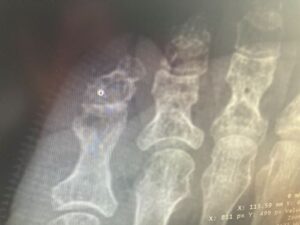
Recently, a patient visited my clinic with a non-healing ulcer. A report from their radiologist indicated that there was soft tissue swelling around the small toe “without” radiographic evidence of osteomyelitis. However, after reviewing the x-rays myself, I found a break in the cortices, or a punched-out appearance, in the lateral middle phalanx. This indicates a bone infection is present. This patient required amputation of the 5th digit, and they were given antibiotics to treat the remaining infection.
Common Symptoms of Bone Infection
How Will My Foot Doctor Treat Bone Infection?
If you have a persistent sore or wound on your foot, your physician may order diagnostic tests to determine the underlying cause. These tests may include X-rays, blood work, or an MRI if a bone infection is suspected. In the event that an infection is identified, your doctor may prescribe a course of antibiotics to treat it.
Some severe cases will require surgery, and as explained in the example above, may even necessitate amputation.
Osteomyelitis can be serious for individuals with diabetes and other health concerns, but with appropriate care and treatment, it can be managed. If you have neuropathy and do not always sense pain or discomfort in your feet, you should regularly inspect your feet for sores or wounds and always maintain proper foot hygeine. Do not hesitate to ask your doctor any questions – we are here to assist you in understanding your health and feeling confident in your treatment.
Dr. Elizabeth Auger, Your Trusted Salt Lake City Podiatrist For Over 24 Years
Dr. Auger has been practicing podiatry in Utah for over two decades. Whether you are dealing with bunions, a diabetes-related foot issue, fasciitis, sprains, skin conditions, an ingrown toenail, or you are searching for the right custom orthotic, Dr. Auger is the experienced and compassionate medical professional you need.
Don’t let foot pain and discomfort impact your life any longer. Contact Dr. Elizabeth Auger, DPM, today for a same-day appointment in one of her three Salt Lake City locations.